
Recent Case Studies
This is a taste of how I think and approach problem solving when it comes to creating new digital and physical projects. I’m learning formal UX concepts as I go, despite working these ideas into all of my work over the past 10+ years.

Self-Published by Design: Building a Crystal Tracker from Scratch
Designing a physical system to help crystal collectors remember, reflect, and actually follow through on tracking their collection.

Task-Based Smartphone Concept for Low-Confidence Users
Smartphones are failing a huge portion of the population. As technology becomes increasingly necessary for daily life, I wanted to reimagine the smartphone as an intuitive tool — organized around what people actually need to do, so they feel empowered and confident and not left behind.

When the Vendor Disappears: Redesigning New-Release Discovery for Small Libraries
I noticed that librarians were scrambling to find replacements after losing Baker & Taylor, the largest book distributor in the U.S. I set out to design a centralized dashboard that tackled their biggest pain points in one place — simplifying new-release discovery and solving for Amazon’s frustrating cart limitations.
AI Interaction & Conversation Design
These days, I’m especially interested in AI and conversation design: figuring out where people get stuck, what they’re actually trying to ask, and how a few better words can make an experience feel easier. Here are some recent explorations wher I unpack those friction points.
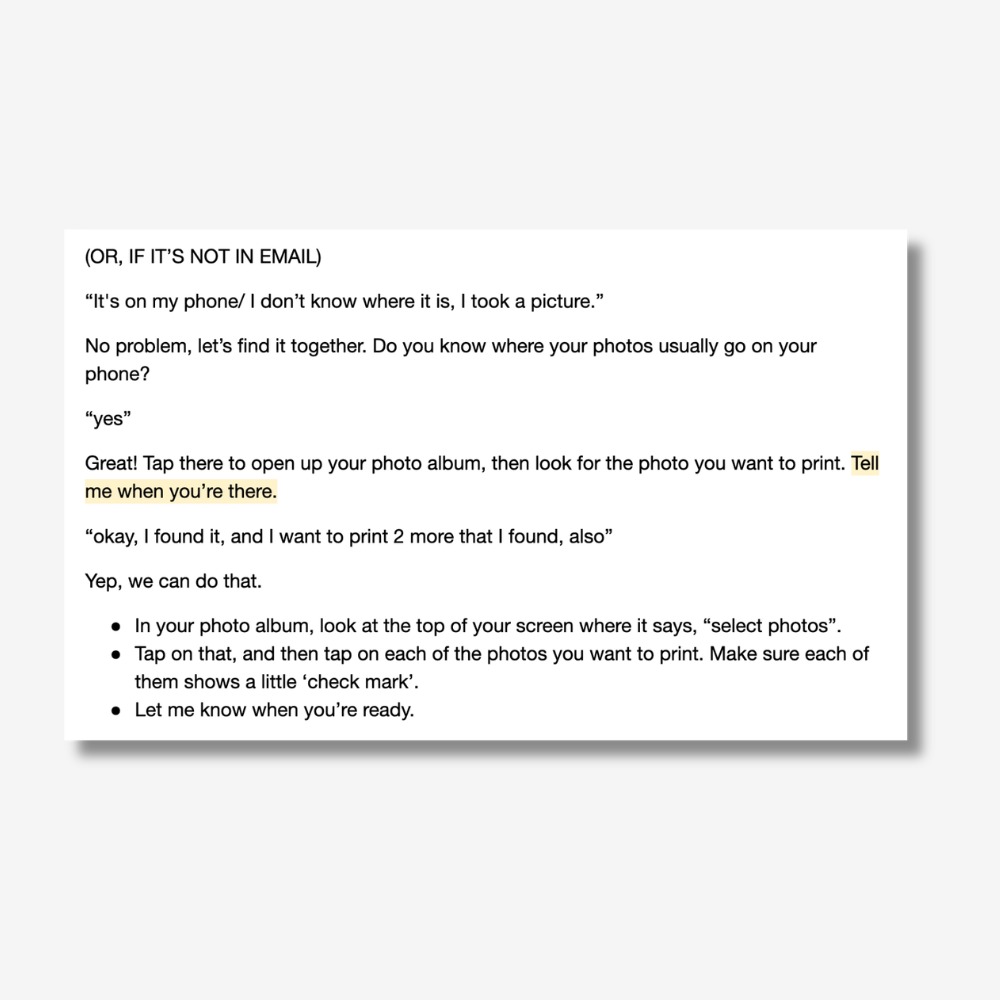
Designing Conversational Guidance for Low-Confidence Smartphone Users
This concept explores how conversational guidance could reduce cognitive overload by breaking tasks into manageable steps while supporting users through moments of uncertainty.

Clare Chatbot Audit: Helping Patients Describe Symptoms Without Making Them Diagnose Themselves
I tested Clare, a healthcare chatbot designed to help patients find care. What started as a simple symptom search quickly turned into a lesson in cognitive overload, medical jargon, and missed opportunities for better patient support.
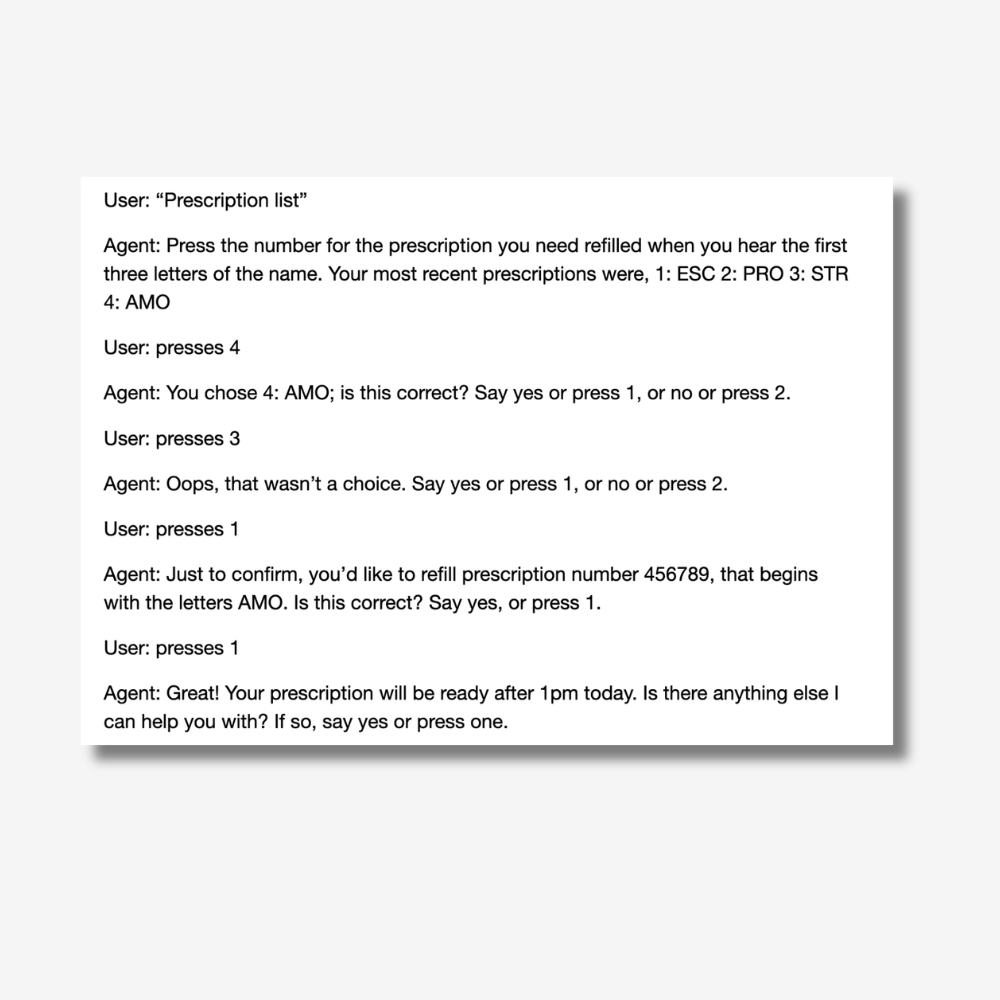
QuickCare Audio: Optimizing Voice User Interfaces for Low-Cognitive Patient Intake
This project maps out QuickCare Audio, a voice-activated phone system (IVR) designed for a high-volume pharmacy clinic. The goal of this redesign was to replace a frustrating, old-school keypad menu with a smart conversational interface that respects a patient’s time and short-term memory.