
Designing Conversational Guidance for Low-Confidence Smartphone Users
This conversational UX exploration builds on my simplified smartphone concept for older adults and low-confidence technology users. Through library work and personal experience helping family members navigate smartphones, I observed recurring patterns of confusion around file systems, icons, navigation, and multi-step tasks.
This concept explores how conversational guidance could reduce cognitive overload by breaking tasks into manageable steps while supporting users through moments of uncertainty.
Flow Overview
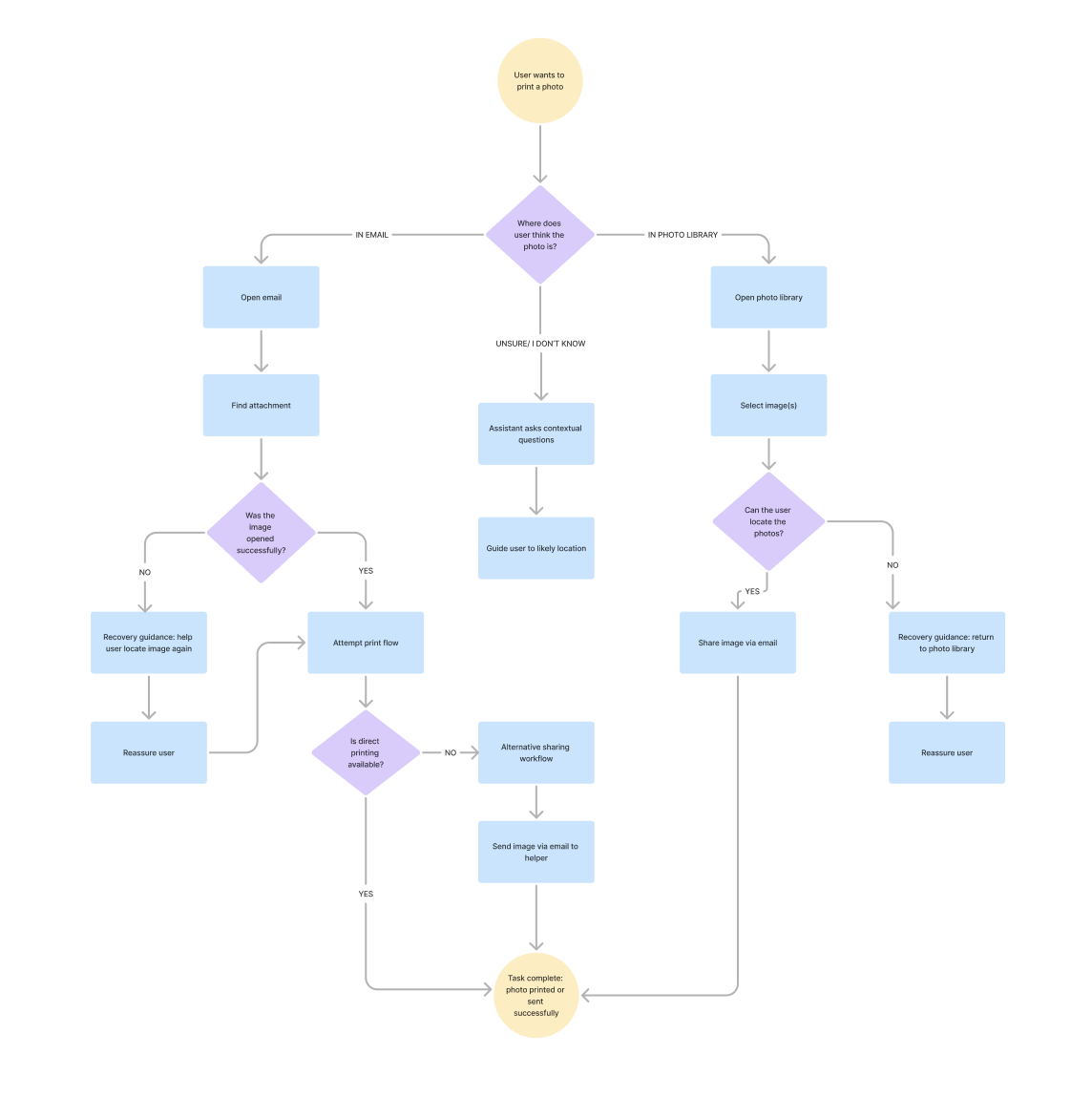
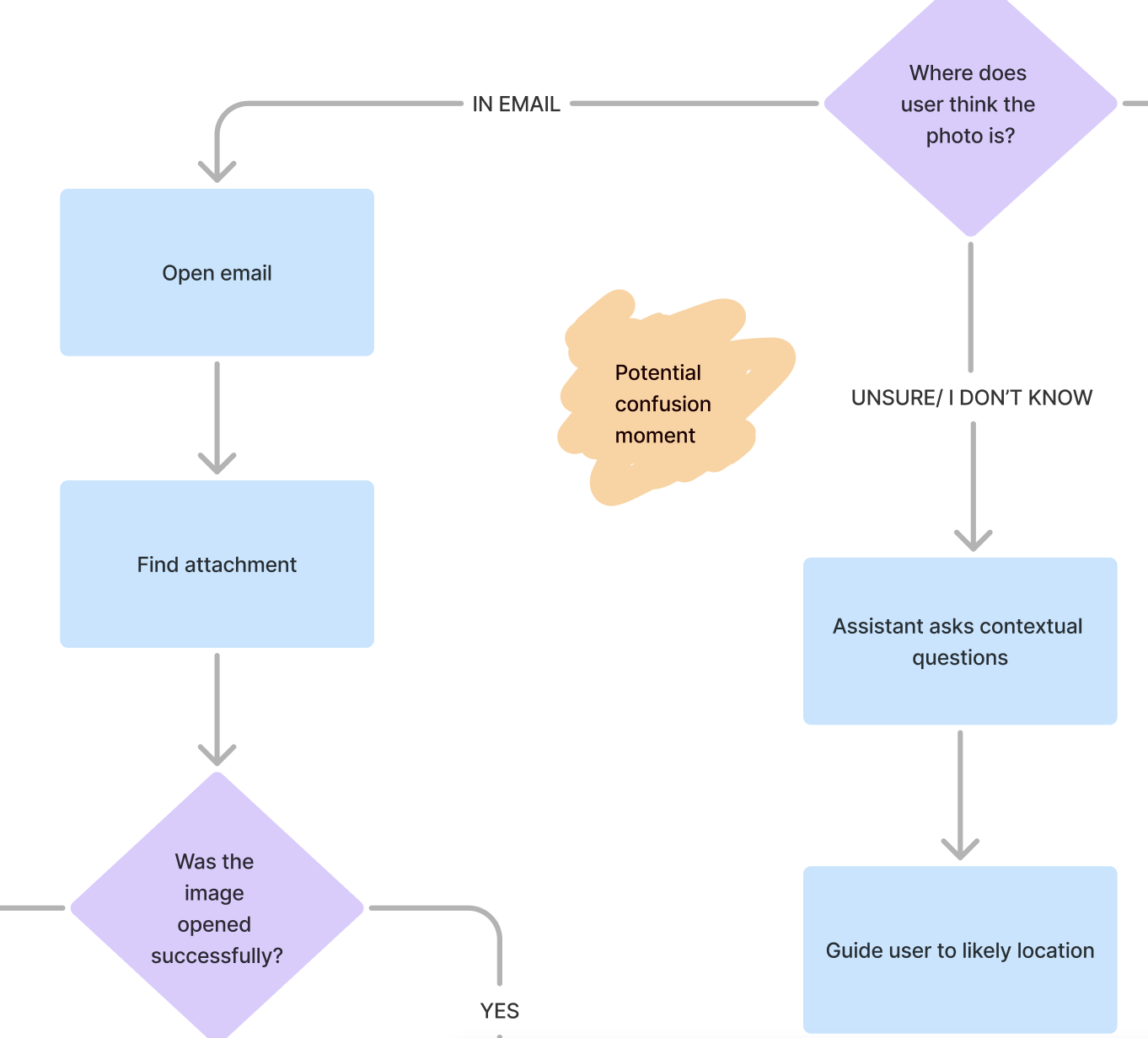

Recovery & Reassurance: Reassures the user before redirecting them back into the task flow.
Conversation Examples

Progressive Guidance: Breaks troubleshooting into one observable action at a time instead of overwhelming the user with multiple instructions.

Observable Language: Uses visual descriptions (“paper airplane,” “envelope”) instead of interface terminology that may be unfamiliar to some users.”
Design Principles
- Provide recovery paths when tasks fail
- Reduce cognitive overload
- Use observable language instead of technical jargon
- Guide users one action at a time
- Reassure users during moments of uncertainty
- Prioritize task completion over app literacy
What I Learned
- Users often describe icons visually rather than functionally
- Reassurance may help reduce panic during moments of technical confusion
- Recovery paths felt just as important as happy paths during the flow design process
- Conversational systems need to support uncertainty, not just commands
- Simplifying language is not the same as oversimplifying users